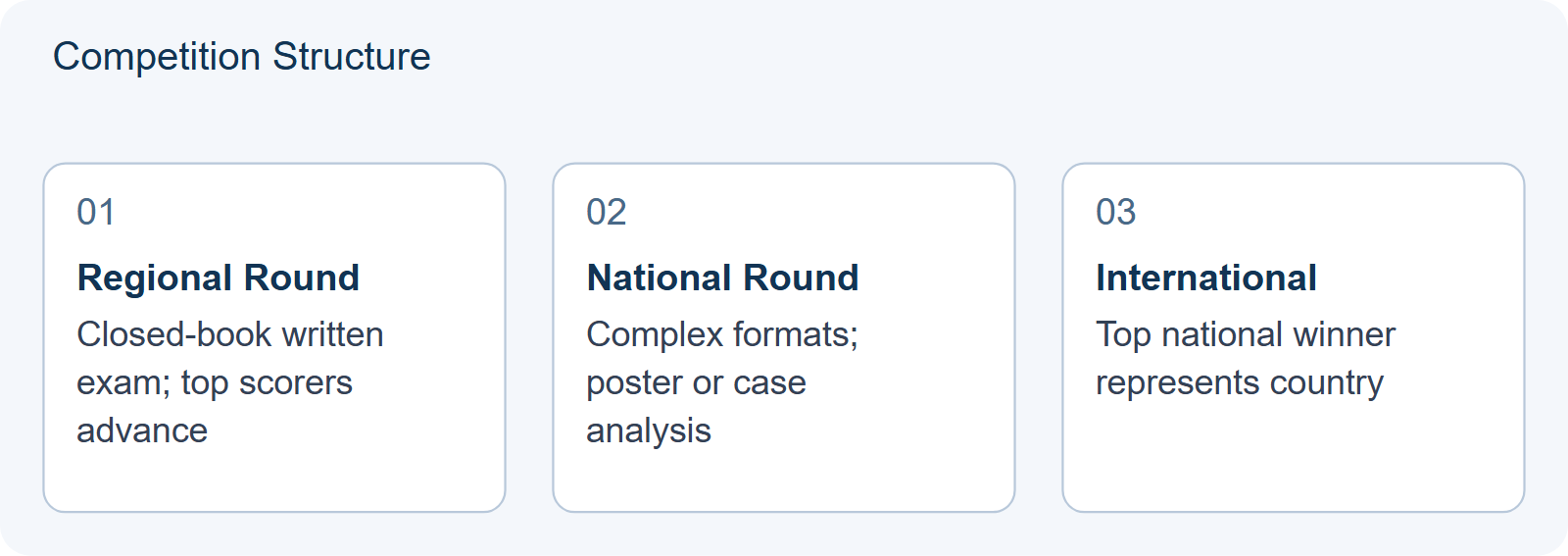
For students aiming to compete in neuroscience, understanding Brain Bee registration procedures is the first step toward success. The 2027 International Brain Bee Championship cycle begins with information released on the official Chinese website in September 2026. While exact dates for regional events typically follow seasonal patterns—regional rounds in late March, national rounds in mid-April, and international championships in August—prospective participants must monitor official announcements for precise deadlines.
A common misconception is that there is a centralized digital portal that automatically assigns test locations upon sign-up. In reality, registration processes often involve coordination through local chapters or schools. Students should not assume an automated system exists until explicitly stated by the organizers. Instead, proactive communication with potential host sites or educational coordinators is recommended during the early autumn preparation phase.
Eligibility and Group Selection
The competition is divided into two primary categories based on grade level. The Junior group accommodates students in grades 5 through 8, while the Senior group is designed for grades 9 through 12. Choosing the correct category is critical, as it determines the scope of the syllabus and the format of the examination. For instance, Senior participants face more complex tasks including image identification and case diagnosis, whereas Junior participants focus on foundational knowledge and team-based poster presentations at the national level.
| Aspect | Junior Group (Grades 5-8) | Senior Group (Grades 9-12) |
|---|---|---|
| Regional Format | Closed-book written exam (60 questions) | Closed-book written exam (80 questions) |
| National Format | Written exam + Team Science Poster | Written exam + Image ID + Case Diagnosis |
| Key Focus | Broad understanding & teamwork | Deep application & clinical reasoning |
Strategic Preparation Timeline
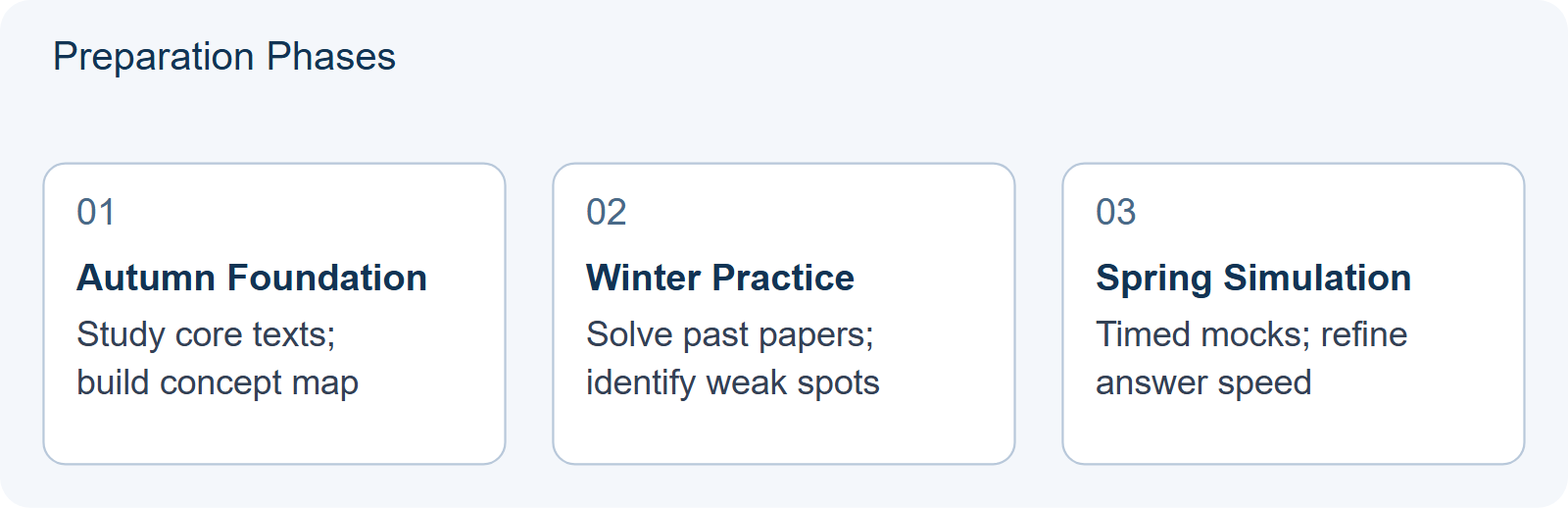
Since the organizing committee explicitly states they do not provide or authorize any official training, self-directed study is essential. A robust plan begins months before Brain Bee registration opens. Autumn (September–October) is ideal for building a foundational knowledge framework using standard textbooks like Essential Neuroscience or resources from BrainFacts.org. This period should focus on understanding core concepts rather than rote memorization.
Winter (November–December) shifts toward targeted practice. Students should engage with past papers and mock exams to identify gaps. It is crucial to note that while some online guides suggest specific cutoff scores for advancement, these vary yearly and depend on relative performance. Therefore, aim for mastery of content rather than chasing arbitrary score targets. Spring (January–March) is reserved for intensive review and simulation of exam conditions, particularly for the time-sensitive components of the Senior round.
Common Pitfalls to Avoid
One frequent error is waiting for the official registration link to appear before starting studies. Given the competitive nature of the event, successful candidates often begin their journey six to nine months in advance. Another pitfall is assuming that prior biology coursework covers the entire syllabus. Neuroscience introduces specialized topics such as neuroanatomy and synaptic transmission that require dedicated study. Additionally, students should be wary of third-party services claiming ‘official’ status; verify all information directly through the official website channels.
For those unsure where to start, consider joining a peer-led study group. Collaborative learning can help clarify complex mechanisms like neurotransmitter pathways or sensory processing systems. Remember, the goal is not just to pass Brain Bee registration, but to build a lasting interest in brain science that extends beyond the competition itself.
Illustrative Decision: Choosing Between Broad Review and Targeted Case Practice
This section presents a hypothetical scenario to illustrate how students can apply strategic preparation advice when facing competing study priorities. It is not based on any real student’s experience, nor does it reflect official rules or guaranteed outcomes. The purpose is to demonstrate decision-making logic during the winter preparation phase described in the article.
Consider “Alex,” a Senior group participant preparing for the 2027 cycle. By mid-December, Alex has completed foundational reading of Essential Neuroscience but feels uncertain about the upcoming case diagnosis component. Alex faces two plausible choices: Option A involves spending the next four weeks re-reading all textbook chapters to reinforce general knowledge. Option B involves dedicating those same four weeks exclusively to practicing clinical vignettes and image identification tasks, using resources from BrainFacts.org and similar open-access materials.
The core tension here is between breadth and depth. Option A ensures no topic is completely forgotten, aligning with the article’s advice to build a strong framework. However, it risks leaving the specific skills tested in the national round—such as interpreting MRI scans or diagnosing neurological conditions from symptoms—underdeveloped. Option B directly targets the high-stakes components mentioned in the eligibility table, potentially yielding higher returns on time invested if the written exam portion is already solid. But it carries the risk of neglecting obscure topics that might appear in the multiple-choice section.
| Decision Factor | Option A: Broad Textbook Review | Option B: Targeted Case Practice |
|---|---|---|
| Primary Goal | Reinforce foundational concepts across all syllabus areas. | Master application skills for image ID and case diagnosis. |
| Risk Profile | Low risk of missing basic questions; high risk of failing complex application tasks. | High potential gain in specialized sections; risk of gaps in theoretical knowledge. |
| Time Efficiency | Lower efficiency if prior understanding is already adequate. | Higher efficiency if weak spots are clearly identified in application tasks. |
What changes the decision? The key variable is Alex’s performance on initial mock exams. If Alex scores consistently above 85% on closed-book written questions but struggles significantly with visual data interpretation, Option B becomes the rational choice. Conversely, if Alex makes frequent errors on basic neuroanatomy definitions, Option A is necessary to prevent foundational collapse. This illustrates why the article advises against chasing arbitrary score cutoffs; instead, students must diagnose their own specific weaknesses through practice.
A reusable self-check for this type of decision involves three steps. First, take a timed mock exam focusing only on the format of the next stage (e.g., regional written test). Second, categorize every error into either “knowledge gap” (didn’t know the fact) or “application gap” (knew the fact but couldn’t use it). Third, allocate study time proportionally to the category with the highest error rate. If application errors dominate, shift to targeted practice like Option B. If knowledge errors dominate, return to broad review like Option A. This method ensures preparation remains responsive to actual performance rather than assumed needs.
As you finalize your Brain Bee China 2027, Decoded entry strategy, consider how to structure your revision. Our guide on Brain Bee Prep Calendar offers an autumn-start plan compatible with heavy academic workloads. Additionally, review Choosing Brain Bee Prep in China to understand the implications of the no-official-training policy for your independent study approach.
Frequently Asked Questions
Is there an official Brain Bee training program?
No. The organizing committee explicitly states they do not provide, organize, or authorize any official training programs or certified instructors.
When does Brain Bee registration open for 2027?
Information regarding the 2027 activity is scheduled to be released on the official website in September 2026. Monitor the site for specific dates.
Can I register if I have no neuroscience background?
Yes. Most participants start from zero. The key is dedicating sufficient time to build a comprehensive knowledge base before the exam.