How the Brain Bee Competition Works
The International Brain Bee is a neuroscience competition for teenagers, founded in 1998 by Dr. Norbert Myslinski at the University of Maryland. Students advance through three tiers — a local or regional round, a national championship, and the World Championship — testing how well they understand the human brain.
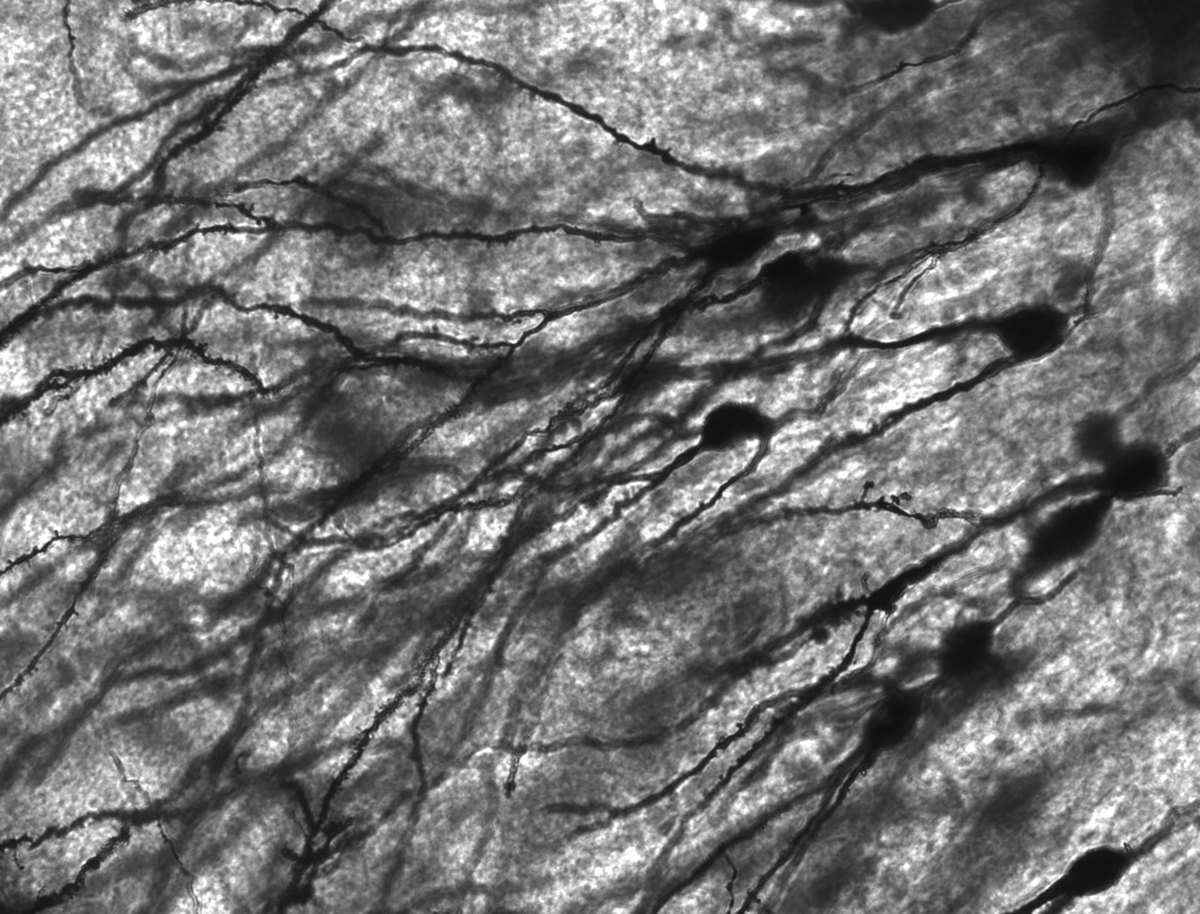
Networks of neurons
Under the microscope, the brain resolves into networks of neurons — the cells and circuits that every Brain Bee round asks competitors to understand.
How does the Brain Bee work?
The International Brain Bee runs on a three-tier ladder. Students first compete locally, winners advance to a national championship, and each country’s national champion represents their nation at the IBB World Championship.
Exact dates change each season
Published sources list slightly different windows for the regional and national rounds from one year to the next, and the World Championship is scheduled around a host conference. Treat the timing above as a guide and confirm the current season’s confirmed dates on the registration page.
Who can enter the Brain Bee?
The Brain Bee is open to school-age students, typically in grades 5 to 12 (about ages 10 to 18), competing in two divisions by grade. Exact eligibility varies slightly by country, so always check your national coordinator’s rules.
Brain Bee Junior
The junior division introduces younger students to neuroscience through a written exam, with some countries adding team activities such as poster projects. It is the on-ramp to the standard competition.
Brain Bee (Standard)
The standard division is the main competitive pathway. Students face the full range of rounds and, if they win their country, advance to the IBB World Championship as their national representative.
What is on the exam?
Every tier begins with a closed-book written exam. From the national championship upward, the Brain Bee adds hands-on practical rounds that test whether students can identify brain structures and reason like a clinician.
Written Exam
Multiple-choice and short-answer questions drawn from the whole study curriculum. No notes or word banks are allowed, and the exam covers neuroanatomy, brain function, disorders, development, and research.
Neuroanatomy & Specimen ID
Competitors identify structures on whole or sectioned brains, models, or images, and read neurohistology slides under the microscope. No word bank is provided — students must recall each structure and its function.
Patient Diagnosis
Students watch patient case videos with a medical history and may request results from a limited set of lab or imaging tests, then diagnose the neurological disorder — spanning genetic, degenerative, and traumatic conditions.
Live Judging Session
Top scorers from the earlier rounds face an oral elimination round in front of neuroscientists. Each wrong answer is a strike; two strikes and the competitor is out, until one champion remains.
The full topic list is anchored on the Brain Facts primer. See the syllabus and study guide for exactly what to learn, and the rules page for how each round is scored.
How do students advance?
Advancement in the Brain Bee is score-based at every tier. High scorers in the local round move up to the national championship, and the single highest-scoring student in each country becomes that nation’s champion.
At the national championship, results from the written exam, specimen identification, and patient diagnosis rounds are combined to determine the overall winner. To be eligible for the IBB World Championship, a student must have won the highest level of Brain Bee competition in their country or region — only one champion per nation advances.
At the World Championship, scores from the written, neuroanatomy, and patient-diagnosis rounds decide who reaches the final Live Judging Session. That closing round is a two-strike elimination: the last competitor standing is crowned world champion. Because rules and point weightings differ by country and season, confirm the details for your event on the rules page.
What is the IBB World Championship?
The IBB World Championship is the top tier of the International Brain Bee, gathering national champions from around the world to compete for the world title. It is held once a year, staged alongside a major international neuroscience conference.
At the World Championship, competitors complete the written, neuroanatomy and neurohistology, and patient-diagnosis rounds under supervision, and the leading scorers advance to the Live Judging Session before a panel of neuroscientists. The top finishers receive cash prizes — recently cash prizes for the top three finishers — along with medals, while every competitor earns a certificate of accomplishment.
Beyond the podium, the International Brain Bee runs IBB NextGen, a program that engages top World Championship winners at specialised neuroscience conferences, giving the highest performers a pathway deeper into the field. Students in China follow the same three tiers on their way toward the world stage.
Choose the Brain Bee support you need
We provide competition registration service and the entry form, periodic RMB 9.9 trial classes, complete Brain Bee tutoring, and a free level assessment.