1. I’ve never studied neuroscience before. Can I participate in Brain Bee?
Yes! Almost all participants start preparing from zero background.
2. Does Brain Bee overlap with subjects I’m currently studying?
Neuroscience overlaps somewhat with biology, psychology, and related topics in middle and high school curricula.
3. How should I prepare?
The competition focuses on exploratory and applied neuroscience knowledge. Students should gain a solid understanding of relevant topics and learn to apply their knowledge flexibly.
4. Are there specific textbooks I should use?
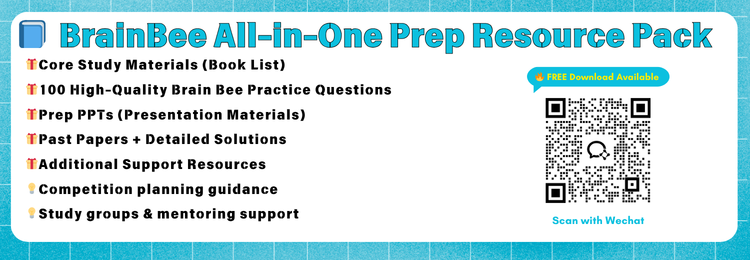
The competition provides a knowledge outline but does not mandate specific textbooks. Participants may choose resources based on their needs. You can download “Brain Facts” for free.
5. How much time should I spend preparing?
It varies by individual. Students can plan their preparation and exploration of neuroscience topics according to their own schedule and learning pace.
6. What is the International Brain Bee?
The International Brain Bee (IBB) is a neuroscience competition for high school students worldwide. Its goal is to inspire students to learn about the brain and encourage careers in neuroscience.
The competition includes written and oral rounds, covering topics such as brain anatomy, neural pathways, neurological disorders, and neuroscience research. Winners of local Brain Bee competitions advance to the national level, and national winners qualify for the International Brain Bee World Championship.
Today, the IBB attracts participants from over 50 countries, becoming a major event in the neuroscience community. It provides students with a unique opportunity to learn about the brain and fosters collaboration between students, educators, and scientists globally.
7. How can I participate in the IBB World Championship?
To compete in the IBB World Championship, you must qualify through your national Brain Bee competition.
-
First, locate your local or regional Brain Bee chapter by checking the list of participating countries on our website.
-
Contact your local chapter for registration and competition details.
-
Prepare for both the written and oral exams. Brain Bee often provides study materials, including textbooks, articles, and online resources.
Early preparation, consistent study, and focus are key. The competition is challenging but rewarding, offering opportunities to deepen your understanding of neuroscience and meet like-minded peers.
8. What are the age requirements for Brain Bee?
Brain Bee is typically open to high school students aged 13–19. Certain eligibility criteria may apply, such as enrollment in high school or a basic understanding of neuroscience topics.
9. How can I find the nearest and most active Brain Bee?
You can locate local Brain Bee competitions on our website. Once you identify your country or region, contact the local chapter for participation details.
Other options:
-
Search online or on social media for local Brain Bee events.
-
Ask your school’s science department or science club for information.
Note: Not all countries have a local Brain Bee chapter, so you may need to travel to participate.
10. I’m from a non-participating country. Can I compete in the IBB World Championship?
If you are from a non-participating country, you may contact a nearby established local or national Brain Bee (see our list). Acceptance is not guaranteed.
Important: IBB cannot accept independent participants from non-participating countries unless they have completed all local and national eligibility requirements.
11. How can I start a national Brain Bee in a non-participating country?
Organizing a national Brain Bee can raise awareness of neuroscience in your community and provide students the opportunity to explore the brain.
Steps:
-
Check the IBB website to ensure your country has no existing national chapter.
-
Gather a team of neuroscience enthusiasts (students, teachers, researchers, or community members) to help organize the event.
-
Contact Ionut Dumitru for guidance on running a successful competition.
-
Identify potential sponsors and partners, such as universities, research institutions, or companies supporting science education.
-
Plan logistics, including venue, participant recruitment, and judges/volunteers.
Note: Students cannot organize the competition but can encourage local teachers and researchers to do so.
12. I’m too old for the IBB World Championship. Can I still participate?
Yes! There are many ways to support the IBB and its mission:
-
Volunteer: Help organize and run local Brain Bee events.
-
Mentor: Guide students interested in neuroscience and help them prepare for Brain Bee.
-
Spread awareness: Promote Brain Bee via social media, schools, or community events.
-
Attend events: Participate in local Brain Bee or neuroscience activities to stay engaged.
-
Donate: Support the organization’s mission and future competitions.
By participating in the Brain Bee community, you can contribute to neuroscience education and positively impact students passionate about the brain.
13. I contacted the national Brain Bee in my country but received no reply. What should I do?
Please note that all national Brain Bee competitions are independent from IBB.
Local and national competitions are run by volunteers who balance full-time jobs and other responsibilities, so responses may not be immediate.
Be patient and continue to check their websites for updates on future competitions.