Why Students Search for a Brain Bee Bootcamp
The query “Brain Bee bootcamp” reflects a real tension: students recognize the competition demands substantial preparation, yet they discover it late or need to compress their study timeline. Some are juggling full IB or AP workloads. Others only learned about Brain Bee after summer and fear they have missed the optimal starting window.
This anxiety is understandable. The Prep Calendar article outlines a twelve-week autumn-start plan for students with demanding academic schedules. But not every student can follow that ideal timeline. The bootcamp search signals a need for concentrated, efficient preparation—not a different competition, but a different format.
What the 2027 Timeline Actually Allows
According to source notes from September 2026, the 2027 Brain Bee schedule had not yet been published at that time. The note explicitly states that the specific 2027 Brain Bee schedule has not yet been announced and it is not yet time for sprint preparation.
For reference, the 2026 season structure per the same source was: regional activities in late March, national activities in mid-April, and international activities in August. This pattern suggests a spring competition cycle with autumn-to-winter preparation as the practical window.
What this means practically: any student beginning preparation in autumn still has months before regional competition. The timeline does not support literal last-minute preparation, but it does accommodate students who need to start later than ideal if they use their available weeks efficiently.
The Three-Phase Structure That Resists True Compression
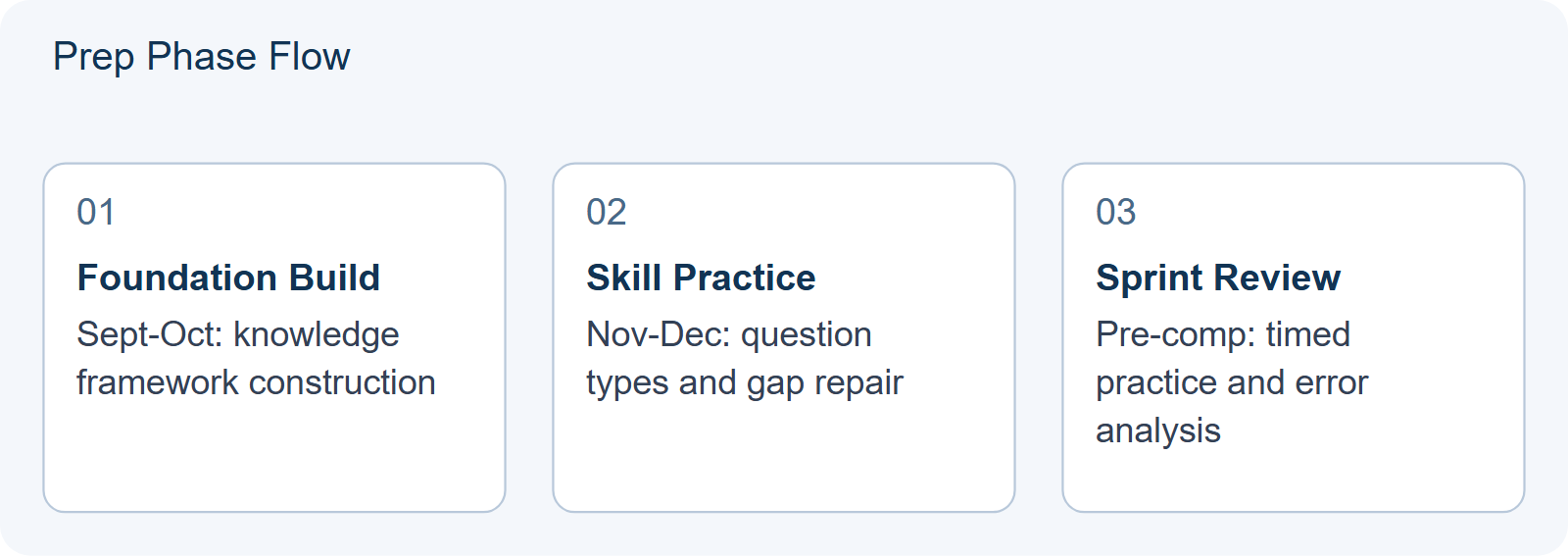
The same September 2026 source note describes a three-phase preparation framework:
- September–October: Foundation Building — Systematic introduction and construction of the first-round knowledge framework
- November–December: Intensive Training — Question-type practice and gap identification
- Pre-competition: Sprint Review — Past papers, mock exams, and error review
This structure reveals why a true bootcamp—defined as a few weeks of intensive study replacing months of gradual buildup—is problematic for Brain Bee. The competition tests not just memorization but understanding and flexible application of neuroscience concepts. The note emphasizes that students should first solve the problem of understanding, then solve the problem of getting it right.
Attempting to compress all three phases into a short intensive period risks producing students who recognize terminology but cannot apply concepts under competition conditions, particularly for the non-multiple-choice sections at national level.
How Structured Courses Distribute Preparation Time
Source notes from July 2026 list two relevant course offerings:
| Course | Hours | Start Date |
|---|---|---|
| Brain Bee Junior Full Course | 40h | July 29, 2026 |
| Brain Bee Senior Full Course | 40h | September 27, 2026 |
These 40-hour courses spread across multiple months rather than concentrating into a bootcamp format. The September 27 Senior course start date, for example, allows roughly six months before typical regional competition timing in late March.
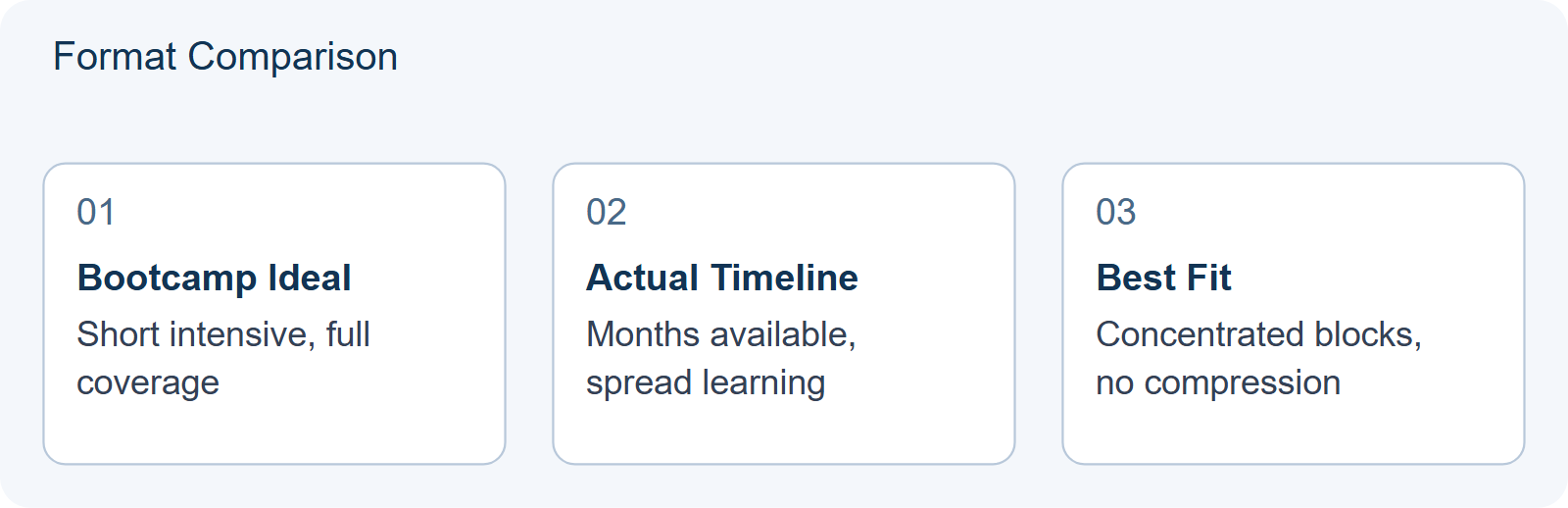
For students searching for bootcamp alternatives, this structure suggests a different approach: concentrated skill blocks within a longer timeline rather than timeline compression. The Autumn-Start Plan provides additional context for students beginning at this point in the calendar.
What Concentrated Preparation Looks Like Within Realistic Constraints
Students who need efficiency can consider these targeted approaches:
- Diagnostic-first study: Use the free preparation materials package (described in source notes as containing selected past papers, 100 practice questions, and core knowledge notes) to identify specific weak areas before committing to any structured format
- Section-specific intensives: Focus additional hours on the competition components most amenable to rapid improvement—regional competition format familiarity, for example, versus the deeper conceptual understanding needed for national-level specimen identification and case diagnosis
- Accelerated foundation building: For students with strong biology backgrounds, the September–October phase may compress somewhat, though the note cautions against skipping the framework-building stage entirely
Decision Framework: Assessing Your Situation
Consider these factors when evaluating preparation options:
- Current knowledge base: Have you studied biology at advanced levels? Neuroscience concepts build substantially on cellular biology and human physiology foundations
- Available weeks: Count from your start date to regional competition in late March, then subtract time for school examinations and other commitments
- Target round: Regional competition preparation differs significantly from national-level preparation, which adds specimen identification and case diagnosis for Senior division
- Learning style: Source notes observe that nearly all participants begin with no neuroscience background; success correlates with time for knowledge to consolidate rather than with prior exposure
Preparing for Consultation: What to Know Before Contacting
If you are considering structured preparation, gathering this information beforehand will make any consultation more productive:
- Your current grade level and science course background
- Whether you are targeting Junior (grades 5–8) or Senior (grades 9–12) division
- Your realistic weekly study hours available through the preparation period
- Whether your goal is regional participation, national qualification, or beyond
The No-Official-Training FAQ provides additional context about the competition’s structure and official stance on preparation resources.
Key Takeaway
The search for a Brain Bee bootcamp reveals real student needs—time pressure, late discovery of the competition, and desire for efficiency. But the competition’s design, emphasizing understanding over memorization and spanning multiple distinct skill domains, resists true compressed preparation. The more productive framing is concentrated preparation within a realistic timeline: using structured phases, targeted diagnostics, and appropriate course formats to maximize the weeks actually available.
Frequently Asked Questions
Is there an official Brain Bee bootcamp or intensive preparation program?
No official bootcamp exists. The Brain Bee China organizing committee states explicitly that it does not provide, organize, or participate in any form of training for the competition, and has not authorized any unit or individual as an official, certified, designated, or cooperative training institution.
Can I prepare for Brain Bee if I start in autumn with no neuroscience background?
Yes. According to source notes from September 2026, nearly all participating students begin with zero background in neuroscience. The key factor is allowing sufficient time to build a complete knowledge framework rather than having prior exposure.
What should I do if I cannot commit to a multi-month preparation course?
Consider using diagnostic materials to identify your specific gaps, then focus limited hours on the highest-impact areas. For regional competition, this may mean prioritizing format familiarity and core concept coverage. Be realistic that national-level skills like specimen identification and case diagnosis require substantial time investment that cannot be shortcut.