Mapping Resources to the Three Competition Formats
The Brain Bee competition tests neuroscience knowledge through distinct formats that change as you advance from regional to national rounds. According to the official FAQ, the activity defines a knowledge outline but does not designate specific textbooks. This means students must choose their own Brain Bee study materials and match them to the skills each round actually requires.
Based on the competition structure, three resources appear consistently in preparation discussions: Essential Neuroscience (Third Edition, Siegel and Sapru), BrainFacts (the primer accompanying BrainFacts.org), and Atlas of Neuroanatomy and Neurophysiology (Netter Collection selections). Each serves a different preparation purpose. The following sections explain where each resource fits into a practical study plan.
Written Test Preparation: Essential Neuroscience
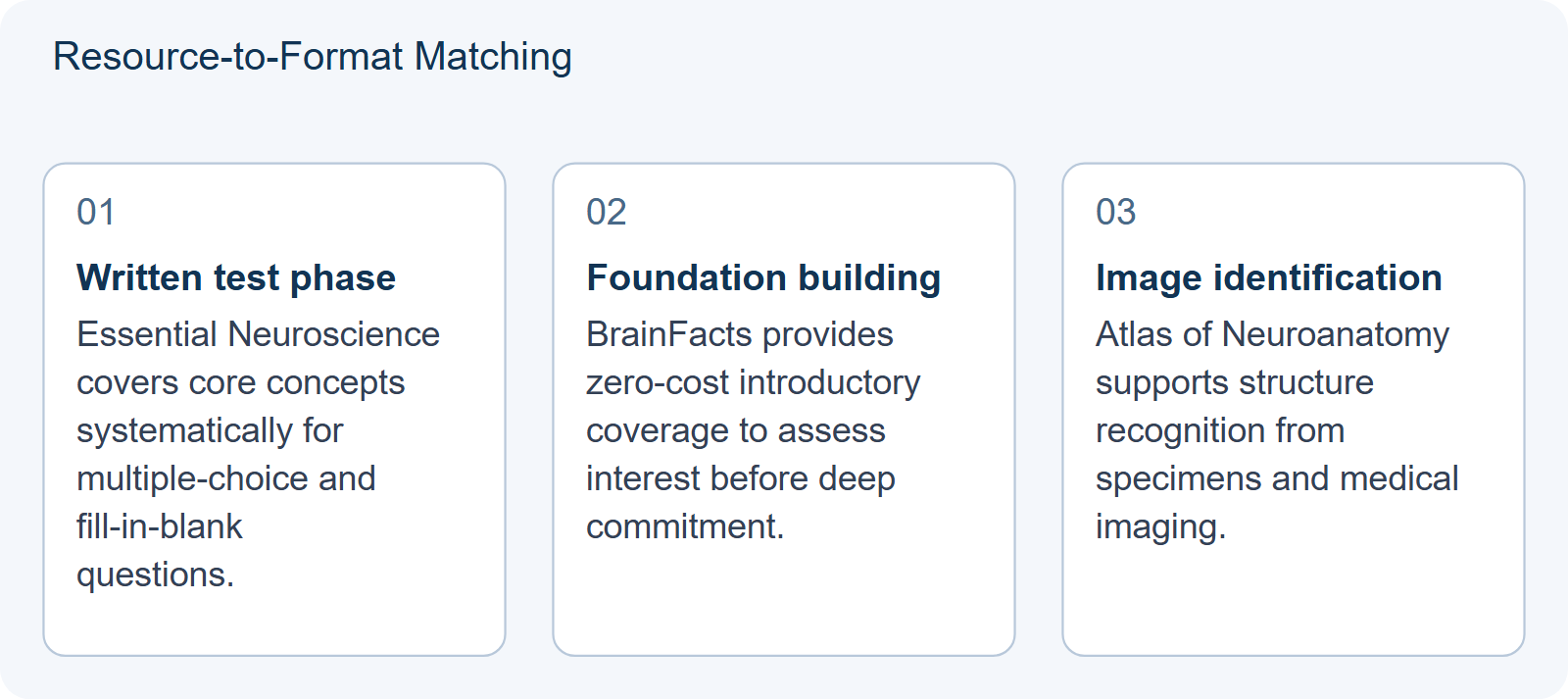
The regional round and the national written section rely on multiple-choice and fill-in-the-blank questions covering core neuroscience concepts. For this format, Essential Neuroscience provides comprehensive chapter-by-chapter coverage of the topics that typically appear in these sections.
Students with no prior neuroscience background often find this textbook useful for building a systematic knowledge base. Its organization follows standard neuroscience curricula, making it easier to connect related topics—such as neural signaling, sensory systems, and motor control—into a coherent framework. The book’s depth supports the transition from basic recognition to application, which the official materials note is valued beyond simple memorization.
Practical suggestion: If you are starting from zero, work through Essential Neuroscience chapter by chapter rather than jumping between topics. This builds the integrated understanding that supports both straightforward recall and the more flexible application questions that appear at higher competition levels.
Foundation Coverage: BrainFacts as a Zero-Cost Starting Point
BrainFacts offers accessible coverage of fundamental neuroscience concepts without requiring a textbook purchase. For students testing their interest before committing to competition preparation, this resource provides a low-risk entry point.
However, the official FAQ indicates that the competition emphasizes understanding and flexible application, not just knowledge retrieval. BrainFacts treats many topics at introductory depth. Students aiming beyond regional participation should plan to supplement this foundation with more detailed material, particularly for topics like neuroanatomy and clinical correlations that receive limited treatment in the primer.
Practical suggestion: Use BrainFacts to assess your genuine interest in neuroscience and to build initial familiarity. If you decide to pursue the competition seriously, transition to Essential Neuroscience or similar comprehensive texts for the depth required at national levels.
Image Identification: Atlas of Neuroanatomy and Neurophysiology
The national round for Senior competitors includes an image identification section: recognizing brain structures from specimens or CT/MRI images. This section contributes 26 points across 13 questions. The Atlas of Neuroanatomy and Neurophysiology, with its Netter illustrations, directly supports this skill.
Students without laboratory access face a particular challenge here. The atlas provides visual reference material that can substitute for hands-on specimen work, though it requires active study methods—covering labels, predicting structures, and self-testing—rather than passive review.
Practical suggestion: Integrate atlas study early in your preparation, not just before the national round. Regular short sessions of structure identification, paired with cross-referencing to Essential Neuroscience for functional context, build the dual knowledge (visual recognition + functional understanding) this section demands.
Building Your Personal Resource Stack
A practical decision framework for selecting Brain Bee study materials depends on your starting point and target level:
| Your Situation | Recommended Starting Point | Next Addition |
|---|---|---|
| No biology beyond standard school curriculum | BrainFacts (free, assesses interest) | Essential Neuroscience for systematic study |
| AP Biology or equivalent completed | Essential Neuroscience (skips redundant basics) | Atlas for image identification practice |
| Aiming for national round qualification | Essential Neuroscience + Atlas simultaneously | Case-based practice materials for diagnosis section |
This framework reflects educational advice rather than official competition requirements. The official guidelines explicitly do not specify textbooks, which creates both flexibility and the selection challenge this article addresses.
What the Official Guidelines Leave Unspecified
The competition’s knowledge outline approach—defining topics without mandating specific books—means students must make their own resource judgments. This differs from competitions with prescribed textbooks or past papers released in structured form.
Two practical consequences follow. First, no single resource guarantees coverage of all tested material. Second, the quality of your preparation depends significantly on how well your chosen materials align with the specific formats you will face at each competition level. The regional written test, national image identification, and national case diagnosis each make different demands that a single book rarely satisfies completely.
For students still evaluating whether to commit to Brain Bee preparation, the official competition overview provides format details. Those comparing Brain Bee with other biology competitions may find the curriculum gap analysis useful for understanding how school preparation translates to competition demands.
Preparing for Consultation: What to Know Before Contacting a Program
If you are considering structured preparation support, having clarity about your own situation will make any consultation more productive. Consider preparing answers to these questions:
- What science courses have you completed, and how comfortable are you with cellular biology and human physiology?
- Do you have access to any of the three resources discussed, or would you need guidance on obtaining them?
- Are you targeting regional participation only, or do you intend to prepare for national-round formats including image identification and case diagnosis?
- How many hours per week can you realistically dedicate to independent study?
These considerations help identify whether you need comprehensive guidance or targeted support for specific competition sections. For students ready to explore structured options, the preparation pathway overview discusses how different support levels align with competition goals.
Experience Class and Structured Options
For students still deciding whether to commit to Brain Bee preparation, Hanlin offers a low-commitment entry point: a 9.9 yuan experience class titled “Is Your Brain ‘Deceiving’ You?—Sensation and Perception.” This session allows prospective competitors to assess their interest in neuroscience topics before investing in full preparation.
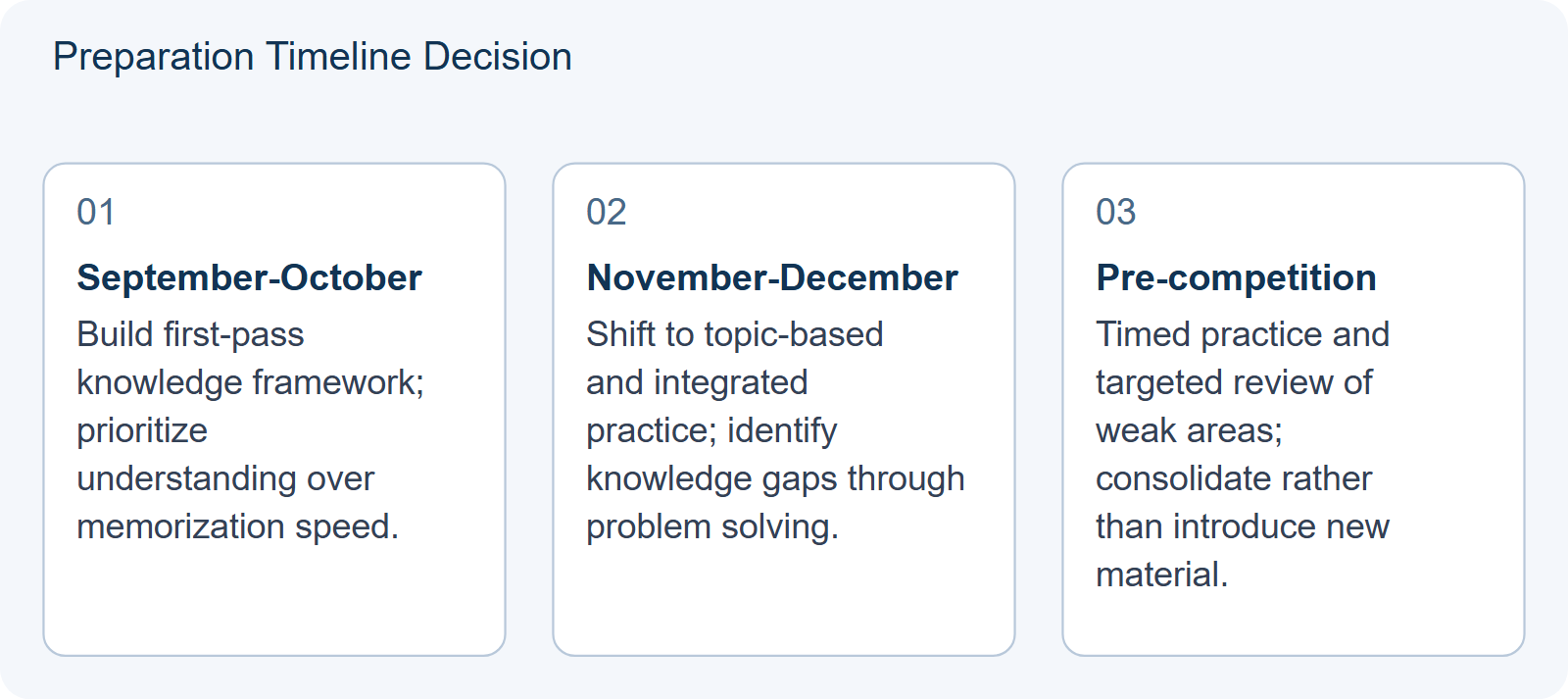
Students who have selected their materials and are ready for systematic preparation may inquire about the autumn full-course programs. The Senior autumn course begins in late September, aligning with the typical timeline for building foundational knowledge before moving to application and competition practice.
Frequently Asked Questions
Does the official Brain Bee organization recommend specific study materials?
No. The official FAQ states that the activity defines a knowledge outline but explicitly does not designate specific textbooks. Students select their own materials based on personal background and competition goals.
Can I prepare for Brain Bee starting from zero neuroscience knowledge?
Yes. The official FAQ states that almost all participants begin with no prior neuroscience background. Success depends more on allowing sufficient time for systematic preparation than on previous specialized knowledge.
Do I need laboratory access to prepare for the image identification section?
Not necessarily. While hands-on specimen access is ideal, the Atlas of Neuroanatomy and Neurophysiology provides visual reference material. Active study methods—self-testing with covered labels, predicting structures before revealing answers—can partially substitute for laboratory experience.