Brain Bee Competition Content and Study Syllabus
The International Brain Bee, the global neuroscience competition founded in 1998, tests one body of knowledge: the human brain and nervous system. Every question traces back to the free “Brain Facts” primer, spanning neuroanatomy, brain function, signaling, disorders, development, and research.
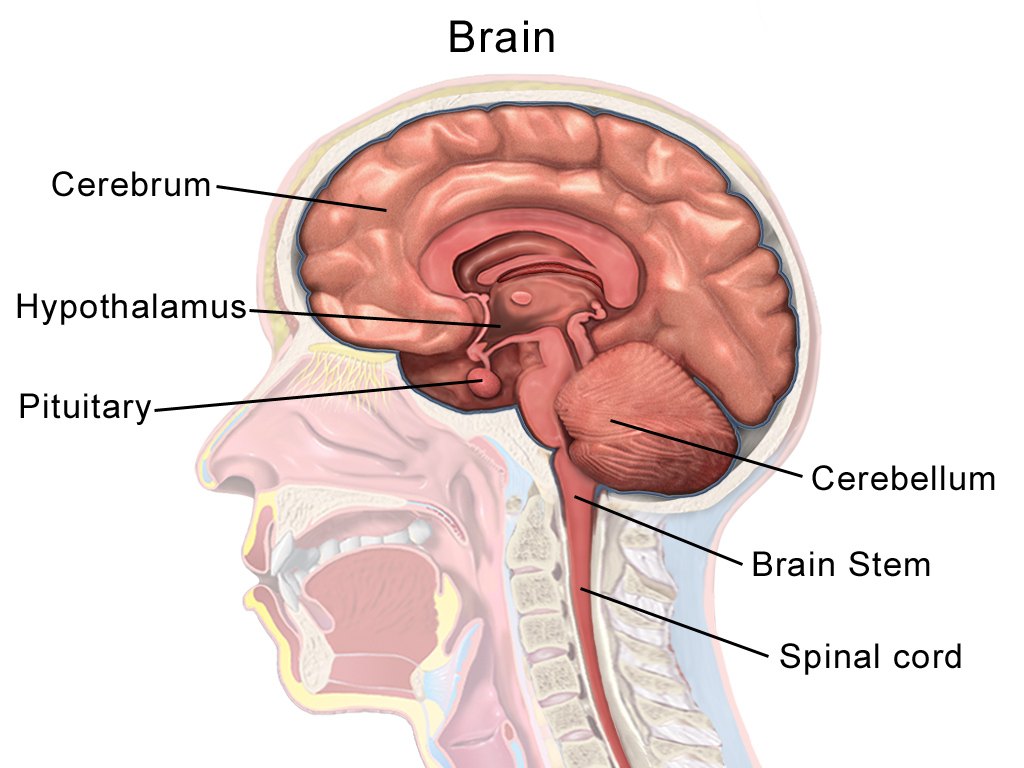
Know the whole brain
Neuroanatomy is the backbone of the syllabus: competitors learn to name and locate the brain’s major structures, from the cerebrum to the brain stem.
What does the Brain Bee test?
The Brain Bee tests neuroscience for high-school and middle-school students, organised around the “Brain Facts” book published by the Society for Neuroscience. The syllabus runs from the anatomy of the brain to how neurons signal, how the brain develops and adapts, what happens when it is diseased, and how scientists study and treat it.
Because the same primer anchors every level and every country, students in China prepare from the same core neuroscience as students in the United States or Europe. The six domains below map directly to how “Brain Facts” and the Brain Bee syllabus group the material. Depth increases with each tier: the local and regional written rounds test recall and understanding, while the national championship and World Championship demand that you apply the same knowledge to real specimens and patient cases.
The Brain Bee syllabus areas
These six knowledge domains cover everything the written exam and higher rounds can ask. All six come straight from the “Brain Facts” primer.
Neuroanatomy
The physical structure of the brain and nervous system: lobes, cortex, deep nuclei, white-matter tracts, brainstem, cerebellum, spinal cord, and the position and connections of each region.
Brain Function
How the brain produces vision, hearing, touch, smell and taste, movement, language, emotion, learning and memory, sleep, stress, and consciousness.
Neurons & Signaling
Cells and circuits: neurons and glia, the action potential, synaptic transmission, neurotransmitters and receptors, and how signals travel and combine.
Brain Disorders
Neurological and psychiatric conditions: Alzheimer’s and dementia, Parkinson’s, epilepsy, stroke, addiction, depression, autism, and childhood disorders.
Development & Plasticity
How the brain is built and how it changes: prenatal development, childhood and adolescence, learning-driven plasticity, and aging across the lifespan.
Research & Treatment
How neuroscience is done: brain imaging, genetics and molecules, deep brain stimulation, brain-computer interfaces, therapies, and the ethics of new tools.
A closer look at each domain
Each of the six Brain Bee domains rewards a different kind of study. Neuroanatomy is about naming and locating; signaling is about mechanism; disorders and diagnosis reward you for connecting a symptom back to the structure or chemistry that failed. Reading “Brain Facts” once tells you the vocabulary; the students who place learn to move between these domains fluently.
Neuroanatomy: structure and location
Neuroanatomy is the map. Competitors are expected to know the cerebral lobes and cortex, the basal ganglia, thalamus and hypothalamus, the limbic system, the brainstem, cerebellum and spinal cord, and the major white-matter tracts that connect them. At the national tier and above, this domain becomes hands-on: you identify structures on whole brains, brain sections, and medical images, and you may be asked where a fiber tract begins and ends or what a region does.
Brain function: what each system does
Brain function links structure to behaviour. The syllabus covers the sensory systems (vision, hearing, touch, smell, taste), motor control, language, emotion, attention, sleep and circadian rhythm, stress, and the neuroscience of learning and memory. A strong answer connects a function to the circuit behind it, for example tying memory to the hippocampus or fear to the amygdala.
Neurons and signaling: the cellular level
This domain is the machinery. It covers the types of neurons and glial cells, the resting and action potential, how ion channels work, synaptic transmission, the main neurotransmitters and their receptors, and how excitation and inhibition combine across a circuit. Understanding signaling is what lets a competitor reason about how a drug or a disease changes brain activity, rather than memorising isolated facts.
Brain disorders and diagnosis
Disorders are where the Brain Bee turns clinical. The syllabus spans neurodegenerative disease (Alzheimer’s, Parkinson’s), epilepsy, stroke and vascular disorders, brain trauma, infections, genetic and structural conditions, psychiatric disorders, neurodevelopmental disorders, and addiction. In the patient-diagnosis round, competitors watch a patient’s history, then choose which tests, from imaging, neurophysiology, cognitive measures, or biomarkers, would confirm the diagnosis.
Development, plasticity, research and treatment
The final two domains frame the brain across time and the science that studies it. Development and plasticity cover how the nervous system is built before birth, how it is shaped through childhood and adolescence, how experience rewires it, and how it ages. Research and treatment cover the tools of modern neuroscience, from MRI and EEG to deep brain stimulation and brain-computer interfaces, along with the therapies and ethical questions those tools raise.
How is the content tested?
The Brain Bee tests the same syllabus through different formats. All levels use a closed-book written exam; the national championship and World Championship add practical and clinical rounds.
Multiple choice
The written exam’s backbone: single-best-answer and sometimes multiple-answer questions drawn from across the whole syllabus. These reward broad, accurate recall of “Brain Facts”.
Fill-in & short answer
Written items where you supply a term, label, or brief explanation rather than pick an option. They test precise vocabulary, for example naming a neurotransmitter or a brain region.
Specimen & neuroanatomy ID
You identify labelled structures on real or model human brains, brain sections, histology slides, and CT/MRI images, often stating the structure’s function as well as its name.
Patient diagnosis
Given a patient’s case and symptoms, you reason to the most likely disorder and choose the diagnostic tests that would confirm it, applying the disorders domain clinically.
Weightings vary by season and country
Some national organisers publish point weightings for each round (for example a written exam, a specimen-identification section, and a case-diagnosis section). Exact weightings, section counts, and formats change from season to season, so confirm the current rules with your national organiser or the registration and contact channels before you build a study plan around any single number.
What are the official study materials?
The official Brain Bee study guide is “Brain Facts”, a free primer published by the Society for Neuroscience. It is the single source every level of the competition is built on.
Brain Facts is a concise, illustrated introduction to the brain and nervous system written for secondary-school students and teachers. It is available free as a PDF and in ePUB and audiobook formats, and it organises neuroscience into the same domains the Brain Bee tests: thinking, sensing and behaving; brain anatomy and function; diseases and disorders; and neuroscience in society. Reading it cover to cover is the baseline preparation every competitor should complete.
Many national programmes also point students toward a fuller free resource, Neuroscience: The Science of the Brain from the British Neuroscience Association, and, for advanced competitors, a university textbook such as Neuroscience: Exploring the Brain (Bear, Connors & Paradiso). A caution worth repeating: the International Brain Bee endorses its own official training only, so treat for-profit “bootcamps” that are not run or endorsed by an official organiser with care.
- Brain Facts (Society for Neuroscience) — the official primer, free
- Neuroscience: The Science of the Brain — free, more detail
- Neuroscience: Exploring the Brain — textbook, advanced depth
- A neuroanatomy atlas or labelled brain diagrams for specimen practice
- Your national organiser’s current syllabus notes
Choose the Brain Bee support you need
We provide competition registration service and the entry form, periodic RMB 9.9 trial classes, complete Brain Bee tutoring, and a free level assessment.