Struggling with highly competitive biology Olympiads like USABO or BBO? Are you looking for a more accessible international biology competition? The answer is the BrainBee Neuroscience Competition.
As an international biology competition centered on neuroscience, BrainBee has seen steadily growing recognition in recent years. It is particularly well-suited for:
- Students with a strong interest in biology and medicine
- Those planning to apply for undergraduate programs in biology, medicine, psychology, or neuroscience
- International students seeking a high-quality competition experience that can be effectively highlighted in college application essays
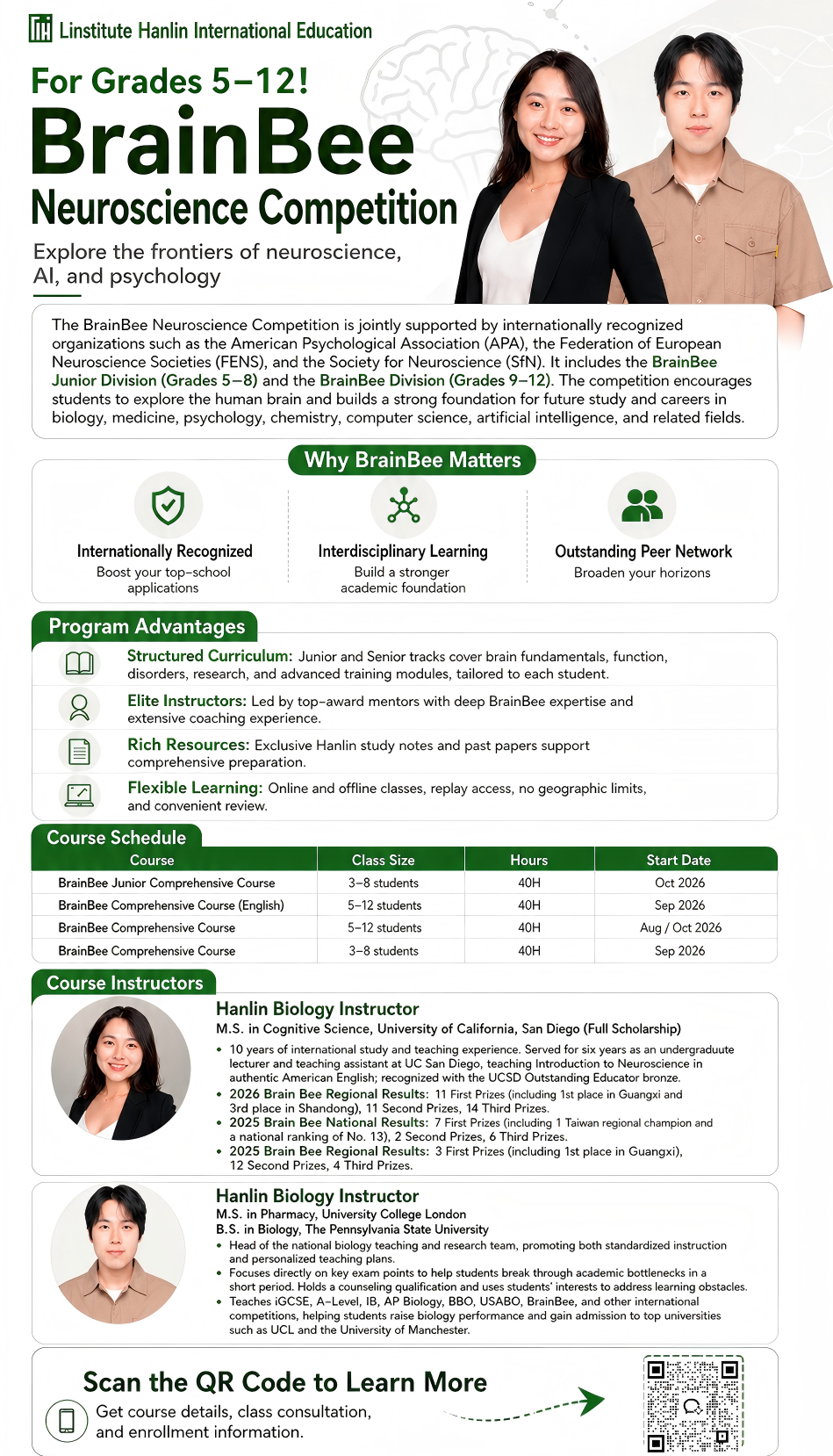
- Students in Grades 5–12, divided into the Junior Division (Grades 5–8) and Senior Division (Grades 9–12)
Why Choose BrainBee? Understanding Its Value
1. High International Recognition & Distinctive Background
BrainBee is a global neuroscience competition with established recognition among middle schools, high schools, and universities in Europe and North America. Compared to traditional biology competitions, it emphasizes:
- Neuroscience fundamentals
- Frontiers in medicine and life sciences
- Interdisciplinary thinking (biology + psychology + scientific research methodology)
This makes it highly distinctive in the biology competition landscape, helping students avoid a homogenized academic profile.
2. Approachable Difficulty: The Ideal Entry-Level Competition
Compared to USABO and BBO, BrainBee:
- Does not heavily test obscure, Olympiad-level biological trivia
- Places greater emphasis on conceptual understanding, logical reasoning, and practical application
It is highly recommended for students participating in an international biology competition for the first time, particularly those in Grades 7–10 looking to build a solid academic foundation.
3. Strong Essay Value for Long-Term Academic Planning
The subject matter of BrainBee naturally lends itself to compelling college application essays. Students can explore questions such as:
- Why did I choose to study neuroscience?
- How do I understand the relationship between the nervous system and human behavior?
- How did this competition help me develop a genuine interest in scientific research?
Participating in BrainBee provides a significant advantage for future applications to biology, medicine, and psychology programs.
2026 BrainBee Competition Timeline
BrainBee follows a three-tier progression: Regional Competition → National Competition → International Competition. The key dates for the 2026 season are as follows:
Regional Competition
- School Registration Deadline: January 1, 2026 (Closed)
- Individual Registration Period: January 1–10, 2026 (Closed)
- Exam Date: February 22, 2026 (Saturday)
Note: The regional round is primarily a written exam featuring fill-in-the-blank and multiple-choice questions. The maximum score is 100, with an overall award rate of approximately 40%.
National Competition
- Competition Dates: March 29–30, 2026 (Saturday & Sunday)
- Format by Division:
- Junior Division (Grades 5–8): Written exam + Team-based scientific poster presentation
- Senior Division (Grades 9–12): Written exam + Image/specimen identification + Clinical case diagnosis
International Competition
- Competition Date: July 2026 (Held concurrently with the Society for Neuroscience Annual Meeting)
- Format: Theoretical knowledge assessment, case study analysis, and live oral defense. This stage demands exceptionally high comprehensive application skills.
What Does BrainBee Test?
Although classified as a biology competition, BrainBee does not rely on rote memorization. Instead, it evaluates the following:
Core Knowledge Modules
- Basic structure of the nervous system
- Brain functions and behavior
- Sensory systems (vision, hearing, etc.)
- Memory, learning, and cognition
- Neurological disorders (foundational understanding)
Competency Assessment
- Biological comprehension
- Scientific reading and information extraction
- Logical reasoning
- Professional English communication skills
Preparation Strategies by Division
Junior Division (Grades 5–8)
Core Objective: Spark interest and build foundational concepts.
Key Preparation Focus:
- Carefully read the official textbook, Brain Facts, to master foundational knowledge such as brain anatomy and sensory functions.
- Develop logical reasoning skills through case studies (e.g., childhood developmental disorders).
- Improve scientific poster design and presentation skills to strengthen teamwork and communication.
Senior Division (Grades 9–12)
Core Objective: Achieve academic depth and develop research capabilities.
Key Preparation Focus:
- Study advanced topics in neurophysiology (e.g., neuronal signal transmission) and neurological diseases (e.g., Alzheimer's disease).
- Intensify clinical case diagnosis training, utilizing real medical imaging data (e.g., MRI, fMRI) to enhance identification and analytical skills.
- Participate in mock oral defenses to familiarize yourself with the international competition format and scoring rubrics.
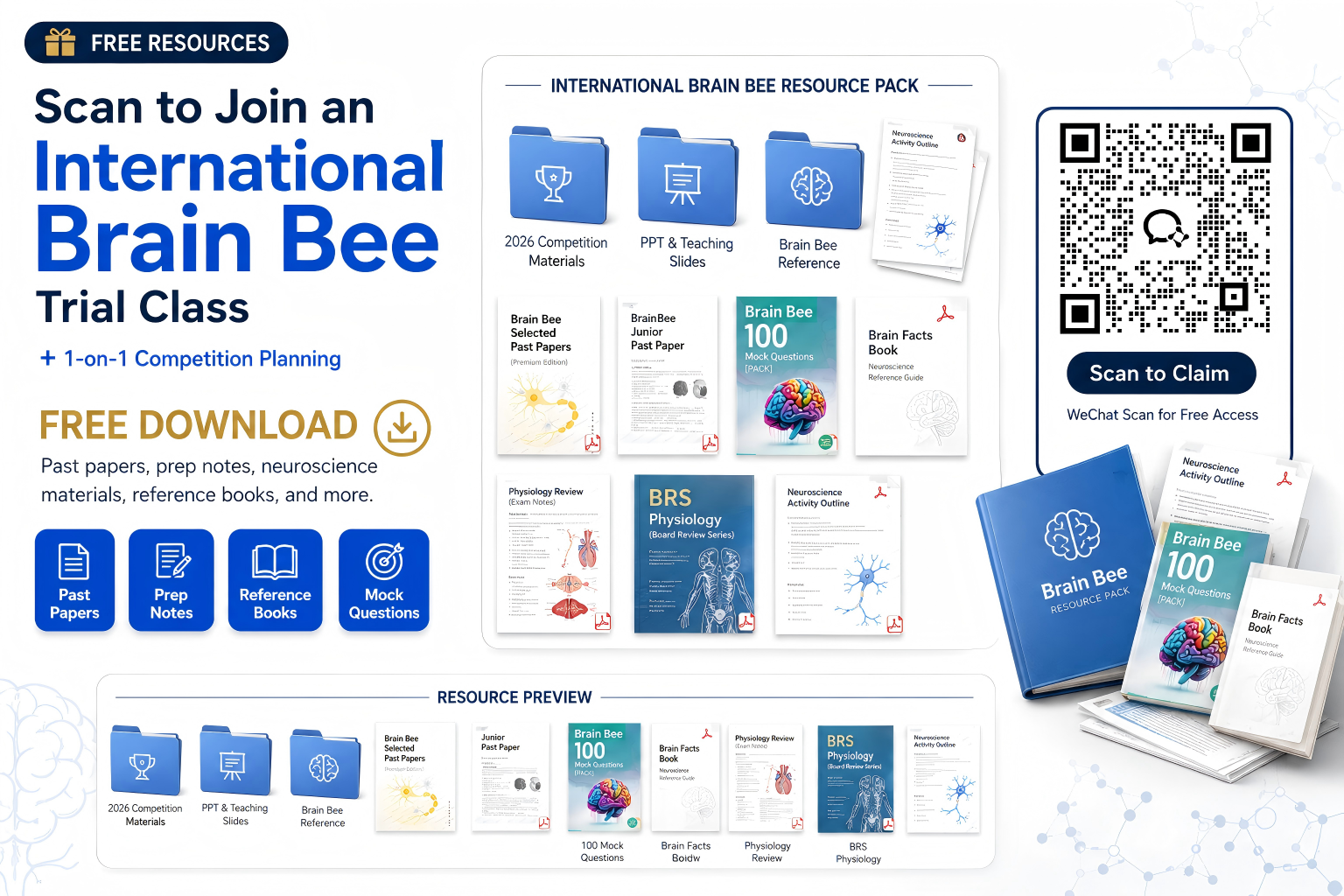
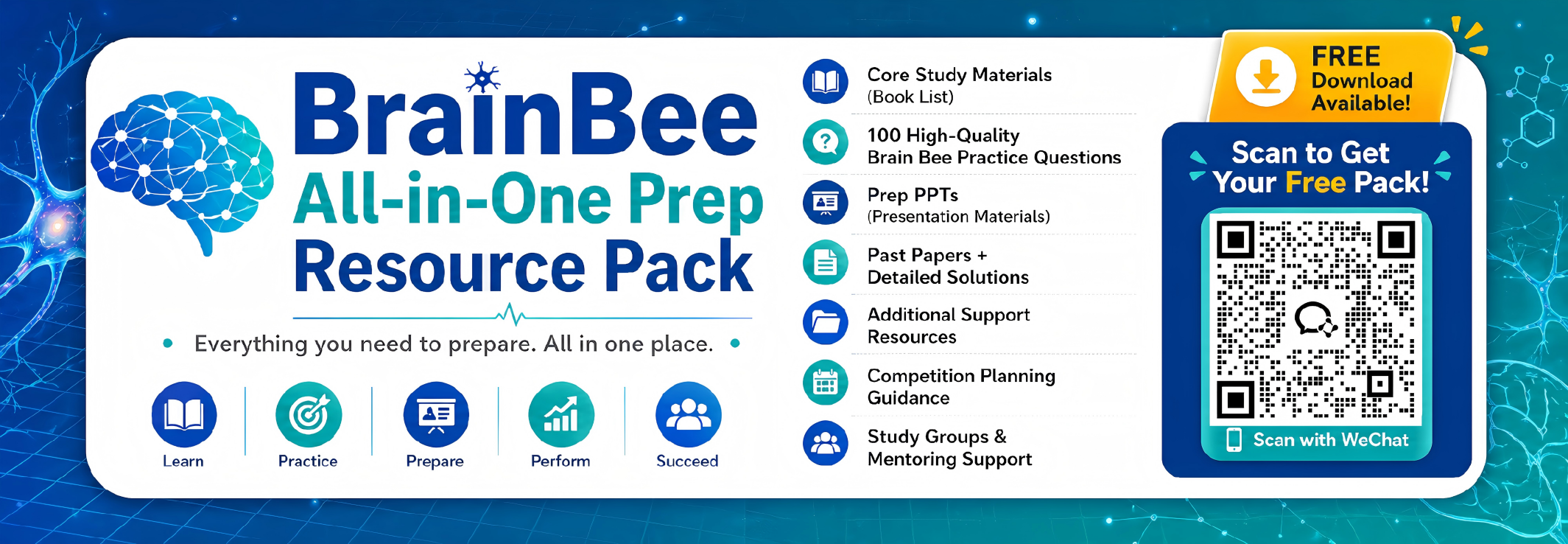
Get FREE Brain Bee Preparation Materials
Scan the QR code below to access free practice papers, study guides, and past competition materials. Start preparing today!